A pipeline can produce security reports without changing a release decision. If nobody knows which findings block delivery, who owns them, or how exceptions are approved, the team has collected information without defining how to use it.
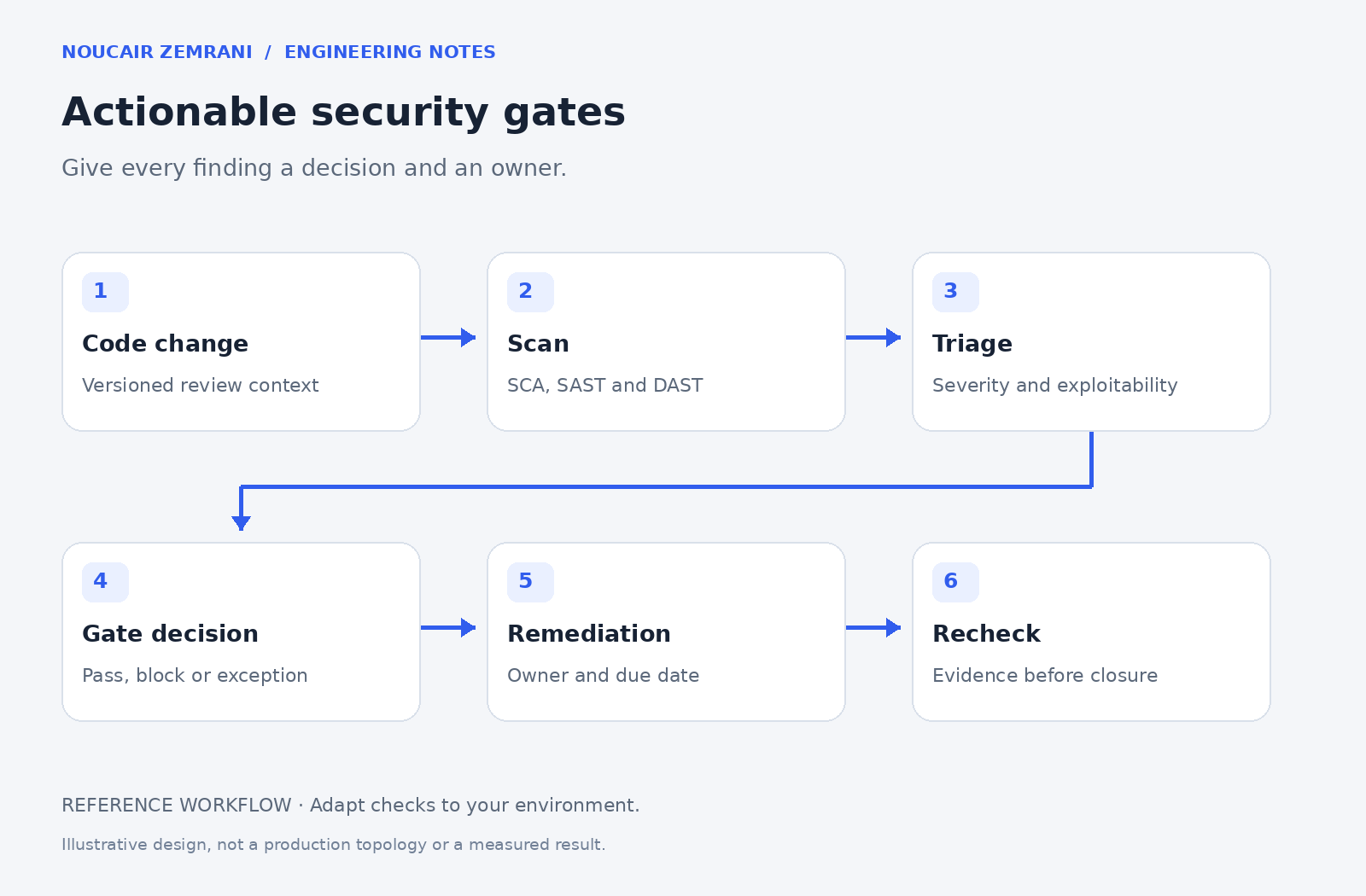
My delivery experience includes SonarQube and SCA, SAST, and DAST integration. The practical challenge is connecting technical findings to an understandable operating process.
Give each check a clear purpose
Static analysis examines code without running the deployed application. Dependency analysis focuses on third-party components. Dynamic testing exercises a running application within its authorized scope. These methods cover different questions; one tool or dashboard should not be presented as proof of complete security.
Define when each check runs, which environment it needs, and who receives the result. Be explicit about which product capabilities are actually available in the installed edition and configuration. Avoid designing a process around a feature the team does not have.
Start with a reviewable release rule
SonarQube quality gates express conditions whose status can be reported to a CI pipeline. The release process must actually consume the result and handle failure. A scanner step returning successfully is not necessarily the same as the project passing the agreed gate.
Choose initial rules the team can explain and operate. Consider exposure, exploitability, affected component, business criticality, and the reliability of the finding. Record why a specific issue blocks a release rather than treating every warning as equally urgent.
Define ownership and exceptions
For each blocking finding, name a responsible team and a next action. An exception should identify the risk, compensating controls, approver, expiry, and review date. Otherwise temporary exceptions can become permanent undocumented decisions.
Keep credentials used by scanners scoped appropriately. Dynamic tests should target an approved environment and avoid uncontrolled operations against real customer data. Security automation itself needs an operating boundary.
Measure useful outcomes
Track unresolved actionable findings, time to triage, overdue exceptions, and repeat failures. Do not claim that adding a scanner reduced incidents unless you have evidence. A small, reliable gate with clear ownership can be a better starting point than a long list of checks that nobody can maintain.
For a first implementation, choose one repository, one staging environment, a small set of documented conditions, and a handover session. If your pipeline produces reports but unclear decisions, I can help review the checks and turn the result into an actionable delivery process.