A working demonstration is a useful milestone. It is not a complete handover if only the person who built it knows where the configuration lives, how to recover it, or what happens when a dependency fails.
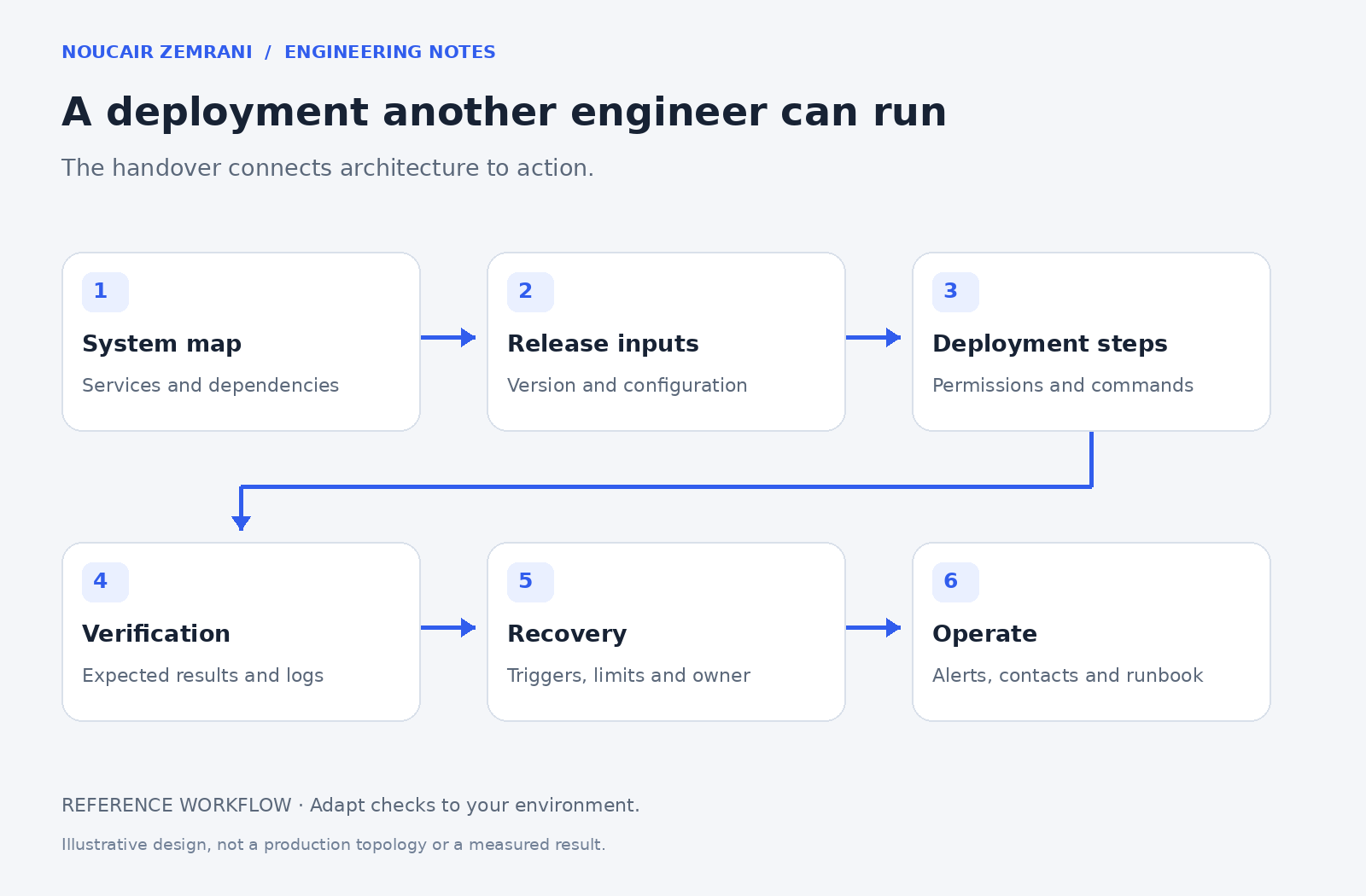
For a client, this is a continuity problem. For an engineering team, it becomes an interruption problem: simple operational tasks keep returning to one person. A good handover makes the next action discoverable.
Start with the service map
Describe the application components, hosting environment, external dependencies, and ownership. Identify the repository, release process, persistent storage, and the approved location of credentials. Document how an authorized operator obtains access; never embed live passwords or API tokens in a runbook.
For a Docker Compose application, explain which service is the API, which service stores data, and which configuration values differ by environment. Show where logs are available and which health checks matter. Keep this aligned with the deployed configuration.
Write procedures as observable actions
A restart procedure should name the target service, prerequisites, expected impact, and checks afterward. A deployment procedure should identify the exact image, configuration changes, approval requirements, and recovery constraints. Avoid instructions such as “restart everything” without explaining the consequences.
Each important procedure needs a success condition. For example, the expected version is running, a representative request succeeds, and monitoring receives fresh data. A command returning zero is useful evidence, but it rarely proves the entire service is working.
Include the failure paths
Document common authentication failures, network dependencies, missing configuration, storage pressure, and notification ownership. Explain when to stop and escalate. Record what information should accompany an incident: time, version, affected operation, sanitized error, and steps already attempted.
Backups and restores deserve their own section, including the latest test evidence and who can authorize recovery. Include any database or state compatibility limitations that make a simple image rollback insufficient.
Test the handover with another person
Ask a second authorized engineer to follow the runbook in a safe environment. Observe which assumptions require an explanation. Update those sections and repeat the relevant checks. This is a practical acceptance exercise, not a promise that documentation eliminates all support work.
My deployment work includes containerized applications and infrastructure automation. For a scoped engagement, I prefer to agree on both the technical deliverable and the handover checks at the beginning. If you want a deployment another engineer can operate, share the application context and the responsibilities the next operator must cover.